Jay Moon Awarded 2026 kynamatrix Research Network Grant for Thesis on Trust-Building AI in the Home


Master of Design graduate student Jay Moon has been named the recipient of the 2026 kynamatrix Research Network “Innovation through Collaboration” Grant, which supports interdisciplinary projects across design, engineering, and computer science. The award provides $2,000 in funding to advance Jay’s thesis project, Living with AI: Trust-building design strategies for seamless human-AI interaction in smart homes.
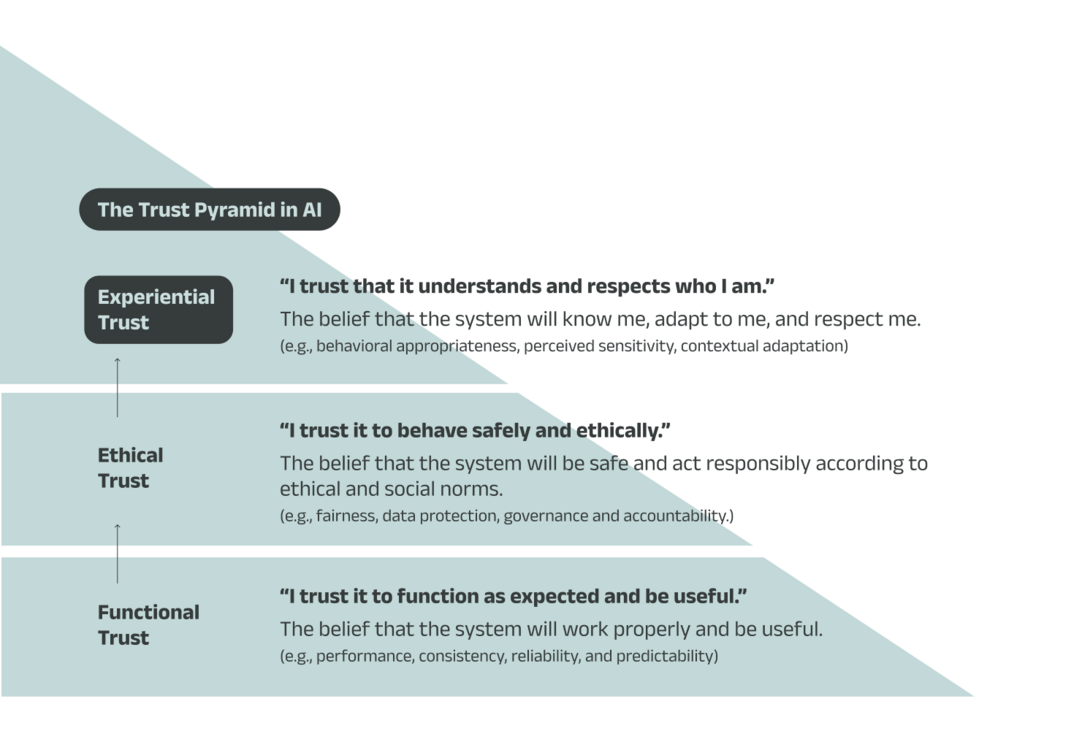
Jay’s thesis explores how people develop trust and comfort with AI agents in everyday domestic environments. Rather than framing trust solely as a matter of technical accuracy or reliability, the work asks a more human question: what makes AI feel safe, respectful, and supportive in daily life? The project examines how trust forms over time through ongoing interactions—shaped by communication style, adaptation, and how AI blends into existing routines across devices.
At the center of the research is the concept of “experiential trust”—trust that emerges through lived, day-to-day experiences rather than abstract measurements. By focusing on how people actually perceive and engage with AI today, Jay’s work considers the assumptions, cognitive biases, and emotional responses that influence human–AI relationships, offering designers practical guidance for an increasingly agentic AI future.
“One surprising discovery,” Jay notes, “was how much resistance people had when I used big, emotional words like trust, relationship, or feelings in the context of AI.” This resistance, Jay found, was often driven by language itself rather than the underlying ideas. The insight revealed how framing and terminology can shape people’s implicit responses to AI—and how design choices extend well beyond interface mechanics.
Jay hopes readers of the work will come away with a more human-centered lens on artificial intelligence. “AI isn’t just a powerful technology,” Jay explains. “It’s something that changes how we live and relate. Designers and researchers need to think seriously about people’s long-term experiences as AI becomes more agentic.”
Faculty advisor Bruce Hanington emphasized both the significance and momentum of the work.
“I’m so pleased by this well-deserved recognition of Jay’s remarkable thesis work on a timely topic of critical interest. From a well-grounded proposal to an intelligent synthesis of research on unique features of experiential trust in agentic AI interactions, Jay is now entering a phase of creative ideation, informed by participatory workshops. This award will be instrumental in advancing Jay’s concept development as the thesis progresses toward the finish line!”

Jay also credits Carnegie Mellon University’s interdisciplinary environment as essential to the project’s development. The combination of rigorous human-centered research, hands-on prototyping culture, and close mentorship across design, HCI, and technology made it possible to approach the work from multiple perspectives.
The kynamatrix Research Network supports collaborative, forward-looking research that bridges disciplines to address complex challenges. This recognition positions Jay’s thesis as a timely contribution to ongoing conversations about how AI systems can be designed to meaningfully support human life—starting at home.
More info about the Master of Design program at the School of Design