Alumna Kelly Gross Named Illinois Higher Education Art Educator of the Year

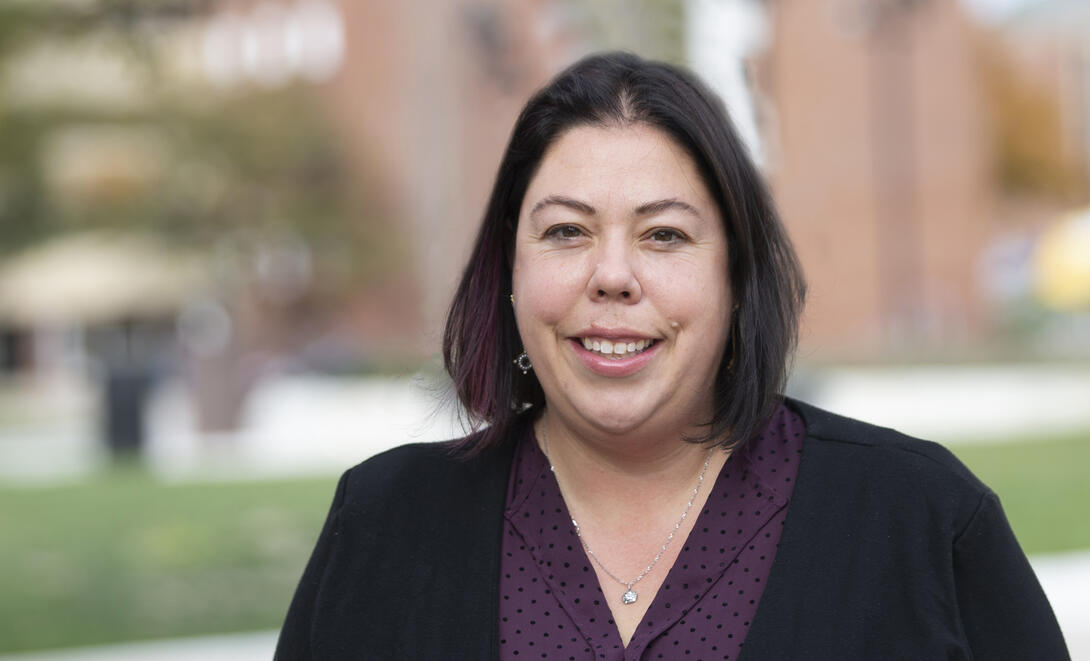
Kelly Gross (BFA ’02), an alumna of Carnegie Mellon University’s School of Design, has been named the Illinois Higher Education Art Educator of the Year, an honor that recognizes her impact as a teacher, researcher, and leader in the field of art education.
Gross’s path to becoming an educator began during her time at Carnegie Mellon, where an early classroom experience shifted her trajectory. While studying Industrial Design, she took a course with photographer and Faculty Emeritus Charlee Brodsky that paired students with an alternative high school to teach photography. That experience, she says, “opened my eyes to teaching as a career and the potential of art as a way to connect with young people and communities.”
After graduating in 2002, Gross joined Teach For America and spent two years teaching elementary special education in New Orleans—an experience she describes as “incredibly formative,” shaping her long-term commitment to inclusive education and supporting diverse learners.
She went on to earn a master’s degree in Art Education from New York University, where her thesis project focused on children displaced by Hurricane Katrina. Titled Children in the Aftermath of Hurricane Katrina: Memories of Home, the project involved designing and teaching an art curriculum in Houston for students who had relocated after the storm. At the same time, she worked with Hospital Audiences Inc. in New York City, teaching and evaluating arts programs for culturally vulnerable populations in settings ranging from nursing homes to homeless shelters.
Gross later moved to Chicago, teaching K–8 art before pursuing a Ph.D. in Art and Design Education at Northern Illinois University, which she completed in 2017. She has since held teaching roles at the School of the Art Institute of Chicago and Vermont College of Fine Arts, and currently serves as an Assistant Professor in the School of Art & Design at Northern Illinois University.
At NIU, Gross teaches undergraduate and graduate courses for future art educators, focusing on methods, digital media, and inclusive classroom practices. She also advises master’s and doctoral students, recently celebrating the milestone of her first Ph.D. student completing their dissertation. Her research sits at the intersection of art education, disability studies, and inclusive pedagogy, with additional work exploring STEAM education and the role of emerging technologies, including artificial intelligence, in art classrooms.
“Winning this award means a great deal to me because CMU played such an important role in shaping how I think about creativity, design, and interdisciplinary learning,” Gross says.
That influence remains central to her teaching. In courses on art and technology, she introduces students to design processes, digital tools, and portfolio development, all approaches rooted in her own undergraduate experience. “The design mindset that I developed there continues to influence how I approach both teaching and research,” she notes.
Gross also emphasizes the importance of integrating design thinking into art education, particularly as students prepare for careers in creative fields. Her current research on AI in high school art classrooms reflects this interdisciplinary perspective, raising questions about creativity, access, and participation in a rapidly evolving technological landscape.
Some of her most vivid memories from Carnegie Mellon are rooted in the studio culture. “There was a sense of deep engagement where everyone was experimenting with materials, building prototypes, and pushing ideas further than they initially seemed possible,” she recalls.
One project in particular stands out: a cardboard chair challenge that required students to design a functional chair using just two pieces of cardboard. Gross developed a modular system of interlocking components—an exercise that captured what she values most about design education: experimentation, problem-solving through making, and iterative thinking.
More than any single project, she says, it was the culture of curiosity and exploration that left a lasting impression, something she now strives to foster in her own students as they develop their creative practices.