Luis Garcia Reflects on His Research & PhD Journey
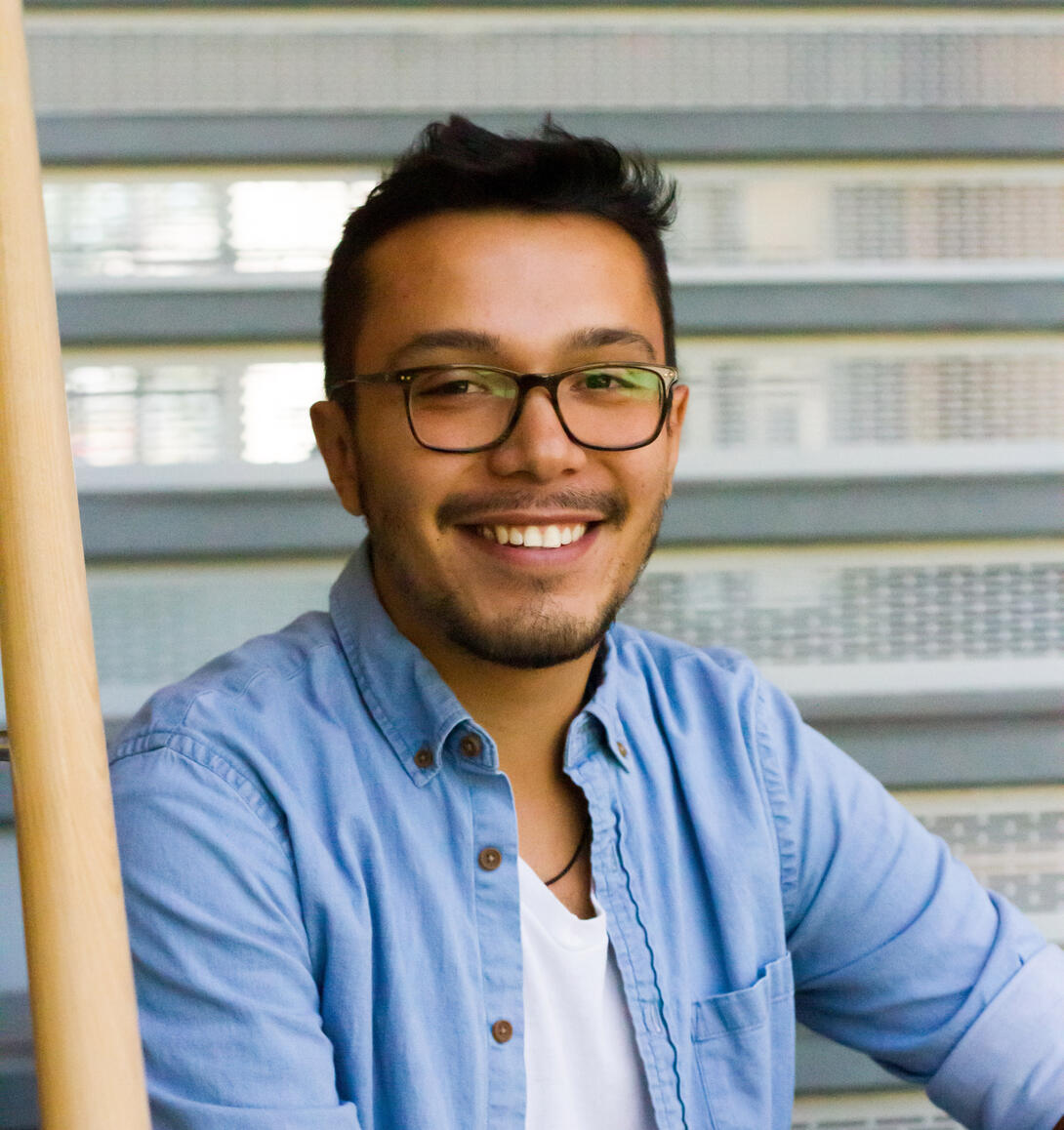
For Luis Garcia, design is a lens for understanding the world and a vehicle for transformation. As a PhD researcher and Teaching Fellow at Carnegie Mellon University’s School of Design, Garcia’s work spans across continents, communities, and modes of teaching. Born and raised in Cuenca, Ecuador, he has spent his academic and professional life questioning what design can and should do in contexts marked by inequality, complexity, and resilience.
Growing up in Ecuador, Garcia witnessed how social and institutional structures shape people’s ability to enact change. “Coming from Latin America,” explained Garcia, “you can’t ignore the everyday negotiations that people have with systems that often fail them." This grounding has led him to challenge the dominant narratives that have long defined Western design education: the myth of universal methods, the obsession with "fast" or "disruptive" innovation, and the belief that design can be detached from the socio-political conditions in which it operates.
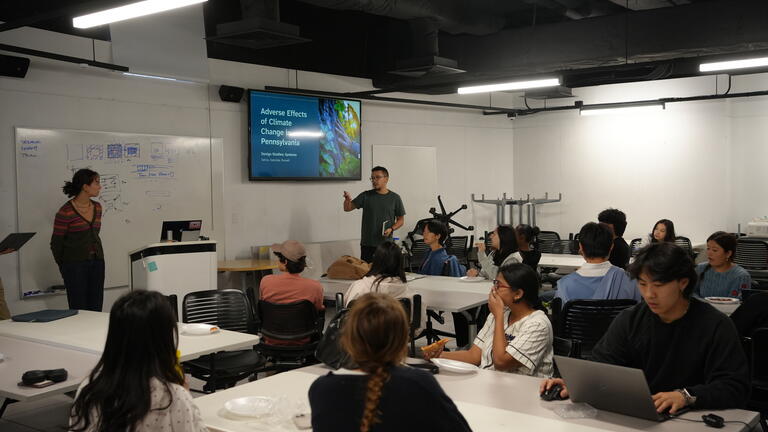
Now, nearing the end of his appointment as a Teaching Fellow, Garcia has been deeply involved in both pedagogy and research. At the School of Design, he teaches courses such as Design Studies: Systems, Design Studies: Persuasion, and Design Studies: Cultures. In his Systems class, he pushes students to adopt a systems perspective, where he teaches them to map relationships, understand socio-technical dynamics, and critically engage with the complex conditions that shape today’s wicked challenges.
“I want students to move beyond surface-level analysis,” said Garcia. “I introduce them to methods that can help uncover relationships and contradictions that reveal the complexity of the systems we’re part of.”

Garcia’s dual position as both a Teaching Fellow in the School of Design and a Senior Teaching Consultant Fellow at CMU’s Eberly Center, places him at the intersection of research, mentorship, and design education. He works with graduate student instructors and postdoctoral fellows to implement evidence-based teaching strategies.
According to Garcia, theory and practice are inseparable. “Theory helps me make sense of what happens in practice and practice pushes me to reimagine theory,” said Garcia. This iterative exchange has shaped his collaborations with civic and community partners. His dissertation fieldwork in Quito’s Secretaría de Hábitat y Ordenamiento Territorial, for example, tested theoretical ideas about systemic transitions against the realities of bureaucratic structures and political constraints. “Working with public servants taught me that systemic change doesn’t happen through disruption, but through care, maintenance, and long-term commitment to the existing knowledge and skills of the community,” said Garcia. Similar insights have emerged from his dialogues with designers and public-sector actors across Latin America, where he observed how practitioners navigate fragile, hierarchical systems while striving to develop design capabilities for public design.
Garcia describes what he calls “designerly code-switching”, which is the ongoing practice of adjusting one’s language, assumptions, and ways of framing problems when working across different communities, disciplines, and institutions. For him, this is not simply about communication; it reflects the deeper need for designers to remain aware of how terminology carries power, shapes expectations, and can either open or foreclose collaboration.
His research extends this idea by examining how designers can cultivate critical consciousness, which is the ability to recognize and navigate the historical, social, and institutional forces that shape both design challenges and design practices. Drawing from his dissertation work, which spans collaborations with Quito’s municipal office for housing and land-use policy, participatory workshops in public design networks, dialogue with Latin American practitioners, and autoethnographic reflection, Garcia argues that effective public design requires far more than the delivery of methods or tools. It demands the surfacing of existing capabilities within communities and institutions, the negotiation of contradictions that structure everyday work, and the development of relational practices that enable people to act collectively amid institutional complexity.
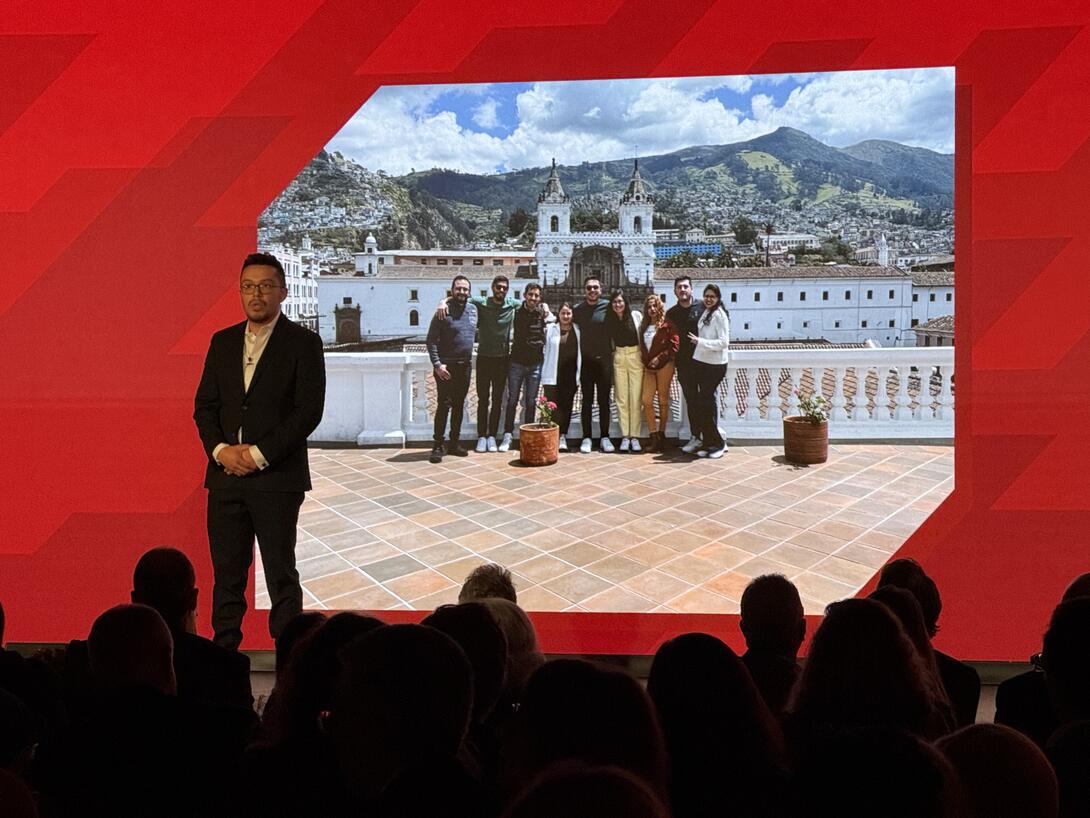
His journey from graphic design to systemic design researcher has been one of expanding horizons. As an undergraduate at the University of Cuenca, Garcia was part of a multidisciplinary Honours Program run in collaboration with the University of Leuven in Belgium, where he developed an early interest in research and critical inquiry. Later, as a Fulbright Scholar, he pursued an MFA in Design Research and Strategy at Indiana University, Indianapolis. There, he also became a Public Space Fellow for the Indianapolis Cultural Trail and contributed to the Indiana Clinical and Translational Sciences Institute’s Research Jam program, using people-centred design to improve health services and community wellbeing.
Before arriving at Carnegie Mellon, Garcia led open innovation initiatives with the Ecuadorian Corporation for the Development of Research and Academia (CEDIA) and the German Cooperation Agency (GIZ), focusing on sustainable urban mobility. In 2017, his work earned national recognition when he and a multidisciplinary team received the Matilde Hidalgo Award for Best Innovation of the Year, Ecuador’s highest honor in education and research.
Through these experiences, Garcia’s research interests have crystallized around the themes of pluriversal futures for design education, the evolving practice design in the public sector, and Latin American communities’ responses to systemic neglect. Across these domains, he calls for design education that resists universalism and instead embraces pluriversality.
When asked what advice he would offer young designers seeking to create systemic or cultural change, Garcia emphasises relationships over results.
“Real transformation begins with mending the social and institutional relationships that have been eroded,” said Garcia. “Design isn’t the recipe for change but it can help with a broader goal of relationship building, attentiveness, and mutual learning. Be okay with not knowing, with letting others lead. Recognizing our limitations is not weakness; it’s what allows genuine collaboration to happen.”
At the same time, Garcia remains acutely aware of the tensions and risks that accompany design’s growing influence. “Design is expanding rapidly, and that’s exciting,” reflected Garcia. “But it also comes with an identity crisis — we need to talk about how easily design can overstep or impose ideas, which calls for the need to define what the fundamental skills and knowledge we need to preserve as designers.”
Still, he’s hopeful about where the field is heading. At recent systemic design symposia such as RSD14, he’s witnessed a shift toward more humble, plural, and reflective practices. “I’ve noticed fewer toolkits and predefined processes at the Conference,” said Garcia. “Instead, people are asking deeper questions, talking a lot about relationality, and focusing on re-storying (or something about paying attention to the narratives that govern us)”
For Luis Garcia, this is where the future of design lies: it is in the relational, the reflective, and the plural. His work stands as a reminder that design’s greatest potential may not be in solving problems, but in creating the conditions for people to imagine and enact change together.
Learn more about the PhD in Transition Design at Carnegie Mellon University's School of Design