Designing Experiences That Invite Learning: MDes Alumnus Brings Interaction Design to Museums and Cultural Spaces

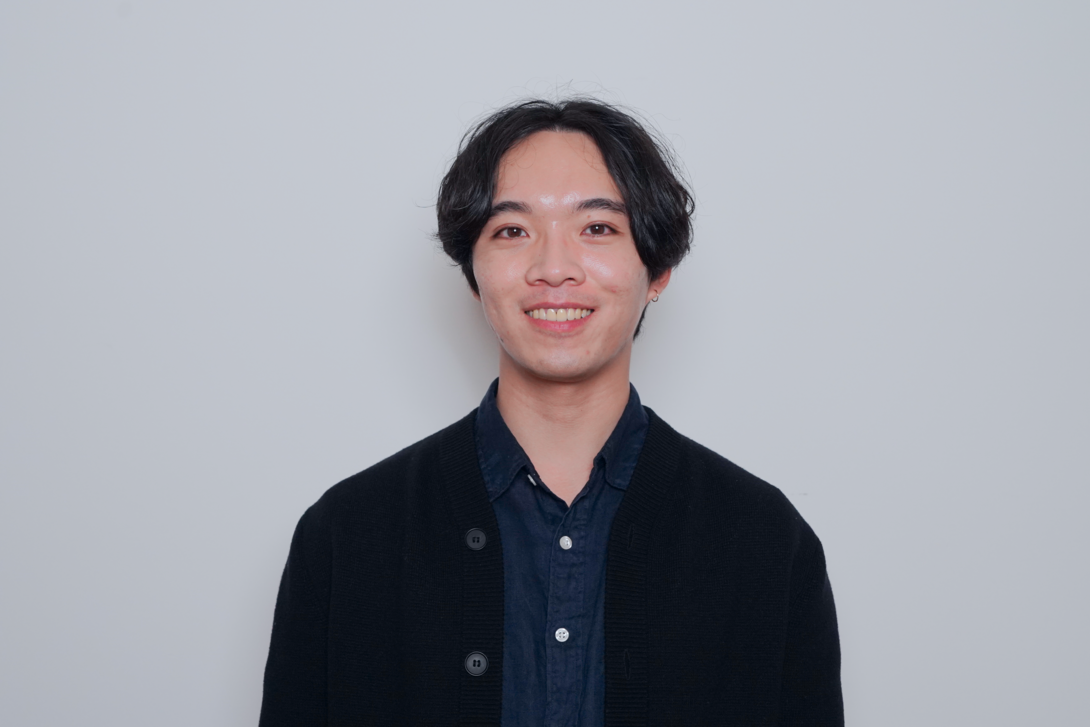
After earning an MDes from Carnegie Mellon University’s School of Design, Shih-Hsueh Wang (MDes ’23) found his way into a design context where curiosity, storytelling, and human-centered thinking intersect every day: museums.
Wang currently works as a UX Designer at G&A Strategy and Design in New York, a firm internationally recognized for designing museums and large-scale cultural experiences. His work focuses on shaping how visitors encounter content—what draws them in, how they move through a space, and how interaction can support understanding and meaning-making.
Since joining G&A, Wang has collaborated closely with exhibit designers, curators, creative technologists, and visual designers on a wide range of projects, from natural history museums and memorial spaces to entrepreneurship education centers. The variety, he says, is part of what makes the work so engaging.
“What makes this job fun is how often it drops me into subject areas I’d never encounter otherwise,” Wang explains, pointing to projects that have introduced him to local biodiversity in Ohio, the history of Kansas City, and even the missions of the U.S. Navy SEALs.
One standout project was at the Cleveland Museum of Natural History, recently ranked among USA Today’s Best New Museums in America. There, Wang designed interactive installations that invited visitors to learn through physical engagement. One installation paired a touchscreen with a hand crank—almost like a slot machine—allowing visitors to explore evolution through motion and choice.

What stayed with him most wasn’t just the interface, but the people around it. Children were drawn in by colorful, fictional creatures and the tactile act of turning the crank, while parents used the interaction as a springboard to explain concepts like mutation, environmental change, and extinction. “Seeing learning unfold naturally through interaction was incredibly rewarding,” Wang says.
That balance—making complex or specialized knowledge accessible without oversimplifying it—continues to define Wang’s work. He is currently involved in several large museum projects still in development, including a national institution dedicated to a U.S. military service. One portion of the museum is designed as an escape-room-style experience for middle and high school students, featuring more than 25 interactive moments woven into a mission-based narrative.
The challenge, Wang notes, lies in translating professional expertise into playful, engaging experiences while maintaining respect for the people and histories represented. Doing so requires deep collaboration with subject matter experts, multiple workshops, and extensive user testing.
Wang traces much of his approach back to his time in the School of Design. While his MDes education emphasized emerging technologies, it also foregrounded ethics, equity, and responsibility—principles that remain central to his practice, particularly in museum contexts.
“Museums ultimately exist to tell people’s stories, or to tell stories to people,” he says. “That mindset of putting people first is something I carry with me every day.”
One formative moment came during the final studio project of his first semester, when his team proposed a conceptual renovation of the Carnegie Museum of Natural History’s Botany Hall. The ambitious project included immersive projections, physical computing, object recognition, audio-based interactions, and an AR-assisted navigation app. Drawing on his architectural background, Wang focused on spatial layout and prototyping immersive experiences—an early signal of where his interests were headed.

Later, working with Professor Daniel Rosenberg Muñoz to help establish the Spatial Experience Lab further shaped his thinking. For his graduate thesis, Wang developed an action-based prototyping platform that encouraged designers and users to communicate ideas through movement and spatial storytelling rather than words alone. The experience changed how he approaches collaboration and design problem-solving.
For students interested in museum or experience design, Wang describes the School of Design as a uniquely generative environment. “You’re constantly working alongside people with very different backgrounds and ways of thinking,” he says. “That pushes you to test ideas early, learn from others, and see design as a collaborative process.”
It’s a philosophy clearly reflected in his work today—designing experiences that invite people in, spark curiosity, and make learning feel both intuitive and shared.
More info about the Master's of Design program at the School of Design